

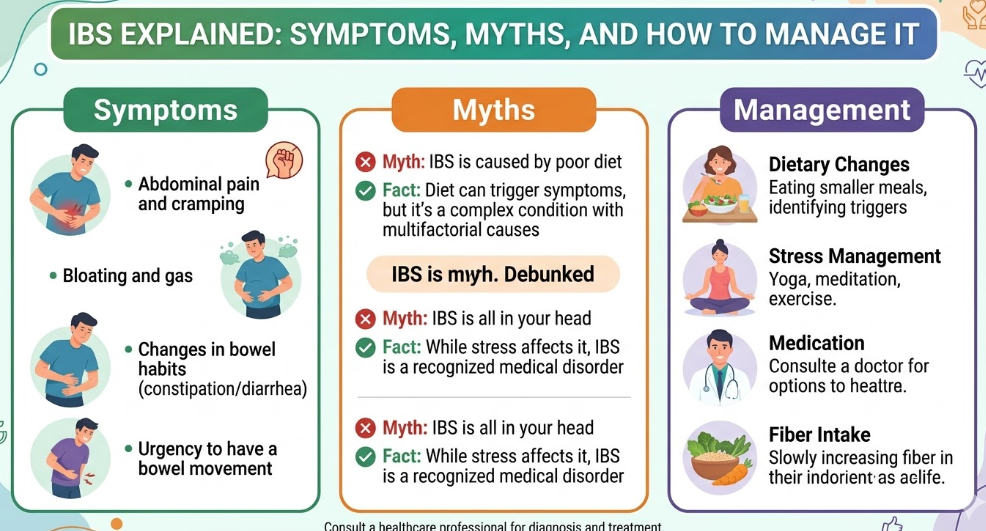
Digestive discomfort like bloating, cramps, or irregular bowel movements can be frustrating—and sometimes even scary. Many people worry these symptoms could signal something serious. But in many cases, they’re linked to Irritable Bowel Syndrome (IBS), a common yet misunderstood gut condition.
In this guide, we’ll break down IBS symptoms, debunk common myths, and explore effective ways to manage it—so you can take control of your gut health with confidence.
What is IBS?
IBS is a functional gastrointestinal disorder, meaning there is no visible damage or disease in the digestive tract. Instead, it affects how the gut and brain interact, leading to uncomfortable symptoms.
Unlike serious conditions such as Colon Cancer or inflammatory bowel disease, IBS does not increase your risk of cancer. However, its symptoms can still significantly impact your quality of life.
Common Symptoms of IBS
IBS symptoms can vary from person to person, but the most common include:
- Abdominal pain or cramping (often relieved after bowel movements)
- Bloating and gas
- Diarrhea, constipation, or alternating between both
- Mucus in stool
- Feeling of incomplete bowel movement
These symptoms tend to come and go and may worsen during stress or after certain foods.
IBS vs Serious Gut Conditions
One of the biggest concerns people have is whether IBS is something more dangerous. Here’s a quick comparison:
| Feature | IBS | Serious Conditions (e.g., Cancer) |
| Structural Damage | ❌ No | ✅ Yes |
| Cancer Risk | ❌ No | ✅ Possible |
| Symptoms Pattern | Fluctuating | Progressive |
| Weight Loss | Rare | Common |
👉 If you experience unexplained weight loss, blood in stool, or persistent severe pain, consult a doctor immediately.
Common Myths About IBS
❌ Myth 1: IBS leads to cancer
Truth: IBS is not linked to cancer.
❌ Myth 2: It’s “just in your head”
Truth: IBS involves real gut-brain interaction issues—not imagination.
❌ Myth 3: There’s no way to manage it
Truth: With the right lifestyle and diet, IBS can be effectively controlled.
How to Manage IBS Effectively
1. Adjust Your Diet
- Try a low-FODMAP diet (reduces fermentable carbs)
- Avoid trigger foods like:
- Spicy foods
- Dairy (if lactose intolerant)
- Caffeine
- Spicy foods
2. Manage Stress
Stress plays a huge role in IBS symptoms. Consider:
- Yoga 🧘
- Meditation
- Deep breathing exercises
3. Stay Active
Regular physical activity helps regulate digestion and reduce stress.
4. Eat Smart
- Eat smaller, frequent meals
- Avoid overeating
- Maintain consistent meal times
5. Seek Medical Advice
A gastroenterologist can help tailor treatment, including medications if needed.
When Should You See a Doctor?
Consult a specialist if you notice:
- Blood in stool
- Sudden weight loss
- Symptoms starting after age 50
- Severe or persistent pain
These could indicate conditions beyond IBS.
FAQs About IBS
1. Is IBS a lifelong condition?
IBS is chronic, but symptoms can be managed effectively with lifestyle changes and treatment.
2. Can IBS go away on its own?
Symptoms may improve over time, but IBS usually requires ongoing management.
3. What foods trigger IBS?
Common triggers include dairy, fatty foods, caffeine, and high-gas foods like beans and cabbage.
4. Is IBS dangerous?
No, IBS is not life-threatening and does not cause permanent damage.
5. Can stress worsen IBS?
Yes, stress is a major trigger and can significantly worsen symptoms.
Take Control of Your Gut Health Today
Living with IBS doesn’t mean living in discomfort. With the right knowledge, diet, and lifestyle habits, you can lead a healthy, active life.
👉 If you’re experiencing persistent digestive issues or are unsure whether it’s IBS or something more serious, don’t ignore the signs.
Consult a qualified gastroenterologist today and get the clarity you deserve.