

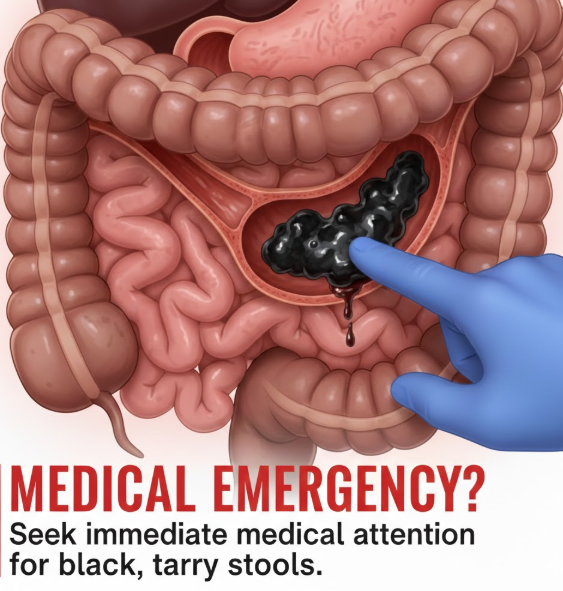
Noticing a sudden change in stool color can be unsettling—especially when it turns black, tarry, or maroon. While not every color change signals danger, black stool should never be ignored, as it may indicate bleeding in the gastrointestinal (GI) tract.
In this article, Dr. Uddhavesh M. Paithankar, Senior Gastroenterologist, explains what black stool means, when it becomes a medical emergency, and how it is diagnosed and treated.
What Does Black Stool Mean?
Black, tarry stools—medically known as melena—often suggest bleeding in the upper gastrointestinal tract, which includes:
- The esophagus
- The stomach
- The first part of the small intestine
When blood is exposed to digestive acids, it turns dark, giving stool a black, sticky appearance and a strong odor.
⚠️ Important: While certain foods, iron supplements, or medications can darken stool, true melena usually has a tarry texture and foul smell, and requires medical evaluation.
When Is Black Stool a Medical Emergency?
Black stool becomes an emergency when it is accompanied by any of the following symptoms:
- Dizziness or lightheadedness 😵💫
- Excessive sweating 😓
- Weakness or fatigue
- Loss of consciousness (fainting) 📉
- Rapid heartbeat or low blood pressure
These symptoms may indicate significant blood loss, which can be life-threatening if not treated promptly.
👉 If you experience black stool with any of these warning signs, seek immediate medical attention.
Common Causes of GI Bleeding
Some common causes include:
- Peptic ulcers
- Gastritis (stomach inflammation)
- Esophageal varices
- Use of painkillers like NSAIDs
- Infections or tumors in the GI tract
Identifying the exact cause is crucial for proper treatment.
How Is the Cause Diagnosed?
The most effective diagnostic tool is an endoscopy.
🔍 What is an endoscopy?
It is a minimally invasive procedure where a thin, flexible tube with a camera is passed through the mouth to examine the GI tract.
✔️ This allows doctors to:
- Locate the source of bleeding
- Assess its severity
- Often treat the problem immediately
The Good News: Many Causes Are Treatable 🏥
One reassuring fact is that many causes of gastrointestinal bleeding can be treated during the same endoscopy, without the need for surgery.
Early diagnosis means:
- Faster recovery
- Fewer complications
- Better overall outcomes
Don’t Ignore the Signs—Early Care Saves Lives
Your digestive health plays a vital role in your overall well-being. Ignoring black stool or delaying medical care can lead to serious complications, including severe anemia or shock.
If you or a loved one notices black stool—especially with concerning symptoms—don’t wait.
Need Expert Care?
📍 Dr. Uddhavesh M. Paithankar, Senior Gastroenterologist, specializes in diagnosing and treating gastrointestinal conditions, including GI bleeding.
👉 Early consultation can make all the difference.
Your health is worth it.