

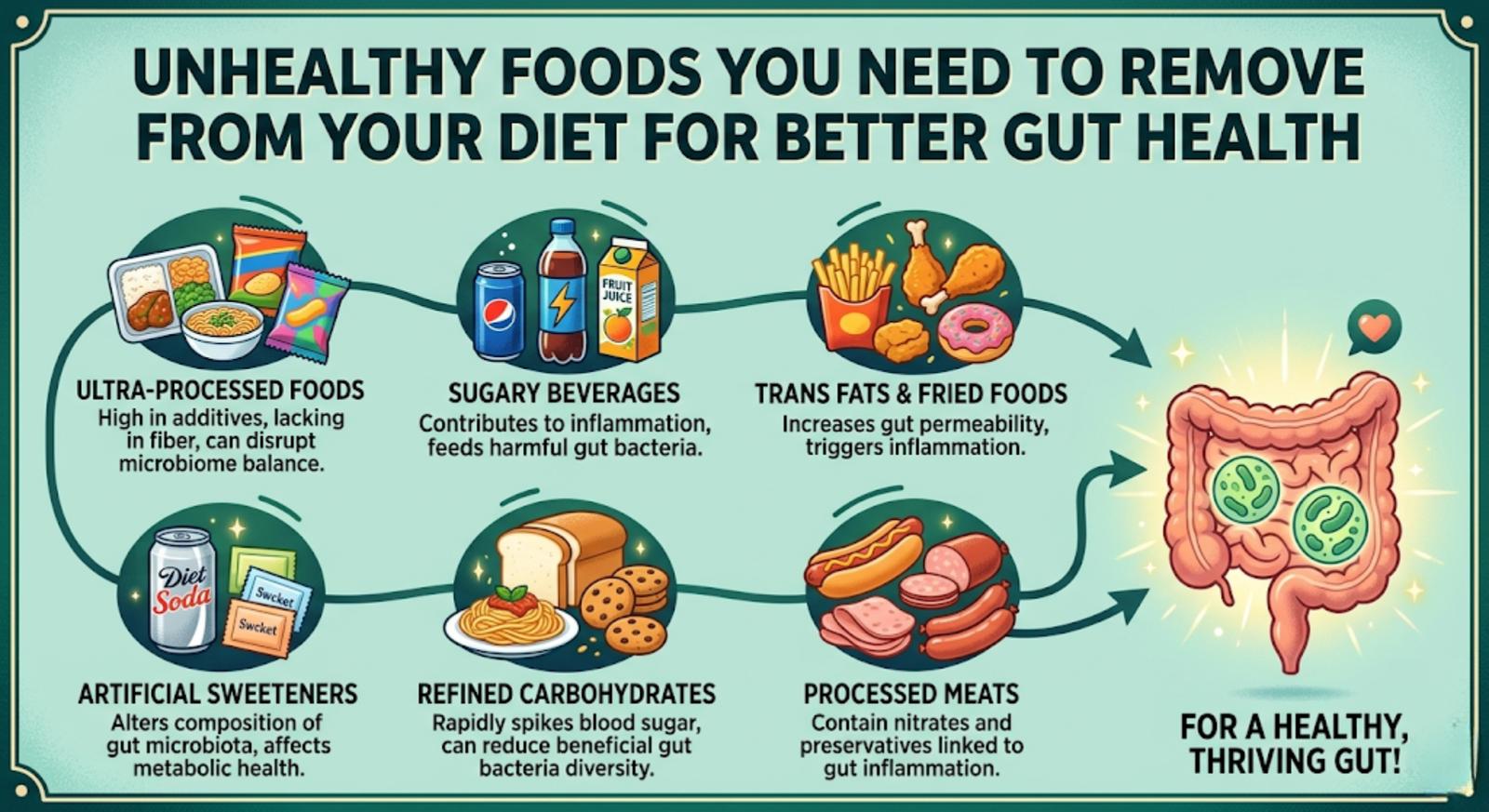
Your digestive system does far more than process food — it plays a central role in your immunity, energy levels, metabolism, and overall health. Poor dietary habits can trigger inflammation, bloating, acidity, constipation, and long-term digestive disorders.
According to Dr. Uddhavesh M. Paithankar, many everyday foods silently damage gut health when consumed regularly. The good news? Making smarter food choices can significantly improve digestion and help prevent chronic gastrointestinal issues.
In this article, we’ll explore the top unhealthy foods you should reduce or eliminate from your diet and healthier alternatives you can start today.
Why Gut Health Matters
Your gut contains trillions of bacteria that influence digestion, nutrient absorption, mental health, and immunity. When unhealthy foods disrupt this balance, it can lead to:
- Chronic inflammation
- Acid reflux and bloating
- Irritable bowel syndrome (IBS)
- Weight gain
- Fatigue and low immunity
- Increased risk of digestive diseases
A gut-friendly diet supports smoother digestion and long-term wellness.
1. Sugary Soft Drinks
Soft drinks and sugary beverages are loaded with refined sugar, artificial additives, and empty calories. Excess sugar feeds harmful gut bacteria and can cause inflammation, gas, and digestive discomfort.
Why They’re Harmful
- Increase bloating and acidity
- Contribute to obesity and fatty liver disease
- Disrupt healthy gut bacteria
Better Alternatives
- Coconut water
- Fresh lemon water
- Herbal teas
- Naturally infused water
2. Ultra-Processed Snacks
Chips, instant noodles, packaged cookies, and processed snack foods contain preservatives, unhealthy fats, and excessive sodium.
Why They’re Harmful
- Low in fiber and nutrients
- Difficult to digest
- Trigger inflammation in the digestive tract
Better Alternatives
- Roasted nuts
- Fresh fruits
- Homemade trail mix
- Yogurt with seeds
3. Deep-Fried Foods
Fried foods are heavy on the stomach and often cooked in unhealthy oils that can irritate the digestive lining.
Why They’re Harmful
- Slow down digestion
- Increase acid reflux
- Cause stomach discomfort and bloating
Better Alternatives
- Grilled foods
- Air-fried meals
- Steamed or baked dishes
4. Processed Meats
Processed meats like sausages, salami, bacon, and hot dogs contain preservatives and high sodium levels that may negatively affect gut and colon health.
Why They’re Harmful
- Linked to digestive inflammation
- High in unhealthy fats and additives
- Can increase long-term health risks
Better Alternatives
- Fresh lean chicken
- Fish
- Plant-based proteins
- Lentils and beans
5. Excess Alcohol
Alcohol can weaken the stomach lining and disrupt the balance of healthy gut bacteria.
Why It’s Harmful
- Causes acidity and dehydration
- Increases inflammation
- May damage liver and digestive health over time
Better Alternatives
- Fresh juices
- Sparkling water
- Kombucha in moderation
6. Artificial Sweeteners
Many “sugar-free” products contain artificial sweeteners that may negatively impact gut bacteria and digestion.
Why They’re Harmful
- Can cause bloating and gas
- May alter gut microbiome balance
- Trigger digestive sensitivity in some people
Better Alternatives
- Natural honey in moderation
- Dates
- Jaggery (limited amounts)
7. Highly Refined Carbohydrates
White bread, pastries, white rice, and sugary cereals are stripped of fiber and nutrients.
Why They’re Harmful
- Spike blood sugar quickly
- Reduce digestive efficiency
- Lack gut-friendly fiber
Better Alternatives
- Whole grains
- Brown rice
- Oats
- Multigrain bread
8. Excess Packaged Foods & Sauces
Packaged sauces, ready-to-eat meals, and processed condiments often contain hidden sugars, preservatives, and sodium.
Why They’re Harmful
- Increase water retention and bloating
- Contain artificial additives
- May trigger digestive irritation
Better Alternatives
- Homemade sauces
- Fresh herbs and spices
- Natural seasonings
Signs Your Diet May Be Affecting Your Gut Health
If you frequently experience the following symptoms, your diet may be harming your digestive system:
- Persistent bloating
- Constipation or diarrhea
- Acid reflux
- Fatigue after meals
- Frequent stomach pain
- Excessive gas
Early dietary changes can help prevent more serious digestive conditions.
Tips to Improve Digestive Health Naturally
Here are simple ways to support a healthier gut:
✔ Eat more fiber-rich foods
✔ Drink plenty of water
✔ Include probiotics like yogurt
✔ Avoid overeating
✔ Exercise regularly
✔ Reduce stress levels
✔ Limit processed foods and sugar
Small, consistent changes can make a major difference.
When to Consult a Gastroenterologist
If digestive symptoms persist despite dietary changes, it’s important to seek professional medical advice. Chronic acidity, abdominal pain, unexplained weight loss, or bowel irregularities may indicate underlying digestive conditions that require evaluation.
Consulting an experienced gastroenterologist can help identify the root cause and create a personalized treatment plan.
Frequently Asked Questions (FAQs)
1. What foods are worst for gut health?
Sugary drinks, fried foods, processed meats, ultra-processed snacks, and artificial sweeteners are among the worst foods for digestive health.
2. Can unhealthy foods cause inflammation in the gut?
Yes. Highly processed and sugary foods can trigger inflammation and disrupt healthy gut bacteria.
3. Are artificial sweeteners bad for digestion?
Some artificial sweeteners may cause bloating, gas, and changes in gut microbiota in sensitive individuals.
4. How can I improve my gut health naturally?
Eat fiber-rich foods, stay hydrated, consume probiotics, reduce processed foods, and maintain a balanced lifestyle.
5. When should I see a gastroenterologist?
You should consult a specialist if you experience persistent bloating, acidity, stomach pain, constipation, diarrhea, or unexplained digestive symptoms.
Take Charge of Your Digestive Health Today
Your gut health directly impacts your quality of life. Reducing unhealthy foods and making smarter dietary choices can improve digestion, energy, and overall wellness.
For expert guidance and personalized digestive care, schedule a consultation with Dr. Uddhavesh M. Paithankar today and take the first step toward a healthier gut and better living.