

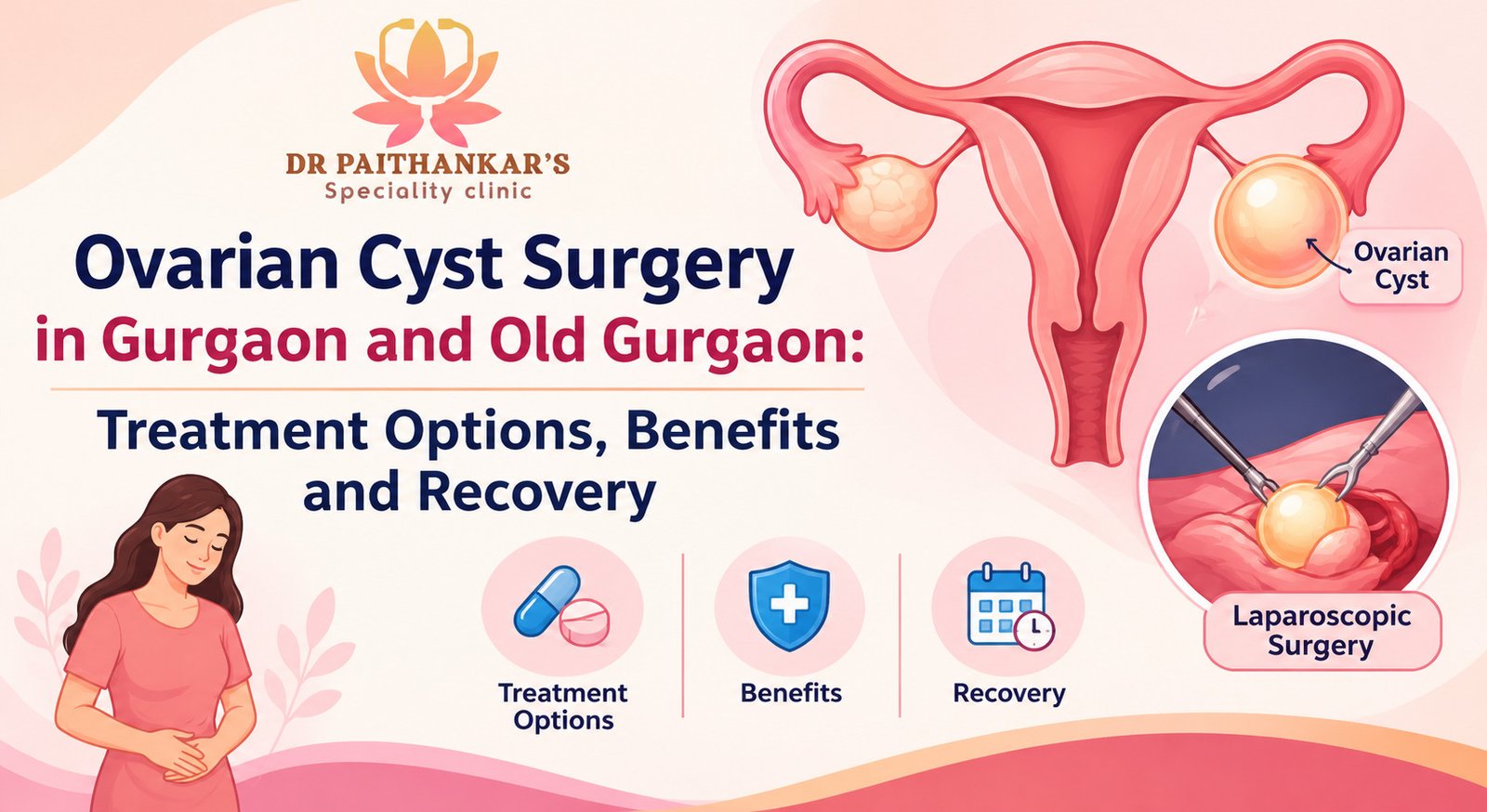
An ovarian cyst diagnosis can bring many questions to mind. Is an ovarian cyst dangerous? Can it affect fertility? Will I need surgery, or can it disappear on its own?
If you are experiencing pelvic pain, irregular periods, bloating, or abdominal discomfort, you may wonder whether an ovarian cyst is the reason. The good news is that many ovarian cysts are harmless and disappear naturally without treatment. However, some cysts require medical attention and, in certain cases, ovarian cyst surgery.
If you are looking for ovarian cyst surgery in Gurgaon or Old Gurgaon, understanding the available treatment options is an important first step. With timely diagnosis, appropriate treatment, and guidance from an experienced gynaecologist, most ovarian cysts can be managed effectively.
At Dr. Mukti Harne Paithankar’s gynaecology practice in Gurugram, patients can receive guidance regarding ovarian cyst evaluation, treatment planning, and minimally invasive gynaecological procedures.
What Is an Ovarian Cyst?
An ovarian cyst is a fluid-filled sac or pocket that develops inside or on the surface of an ovary. The ovaries are two small reproductive organs located on either side of the uterus. They release eggs and produce important hormones that regulate the menstrual cycle and reproductive health.
You can think of an ovarian cyst as a small fluid-filled balloon that develops around or inside an ovary.
Most ovarian cysts are non-cancerous, and many disappear without medical treatment. However, some cysts may grow larger, cause discomfort, or develop complications that require medical attention or ovarian cyst surgery.
What Are the Common Types of Ovarian Cysts?
Ovarian cysts can develop for different reasons. Understanding the type of cyst helps a gynaecologist decide whether monitoring, medication, or surgery is necessary.
Some common types include:
- Functional Ovarian Cysts: These develop during the menstrual cycle and usually disappear naturally within a few menstrual cycles.
- Dermoid Cysts: These may contain different types of tissues, such as hair, skin, or fat. Some dermoid cysts require surgical removal.
- Endometriomas: These cysts develop due to endometriosis and may contain thick, dark blood.
- Cystadenomas: These develop from ovarian tissue and may grow quite large.
- PCOS-Related Follicles: Polycystic Ovary Syndrome (PCOS) involves multiple small follicles in the ovaries. It is different from having a single ovarian cyst.
Identifying the type of ovarian cyst is essential for choosing the right treatment approach.
What Are the Symptoms of an Ovarian Cyst?
Not every ovarian cyst causes noticeable symptoms. Many women discover they have an ovarian cyst during a routine ultrasound or pelvic examination.
However, when symptoms occur, they may include:
- Pain in the lower abdomen or pelvic area.
- A feeling of heaviness or pressure in the stomach.
- Pain during sexual intercourse.
- Irregular menstrual periods.
- Frequent urination due to pressure on the bladder.
- Difficulty emptying the bladder or bowel.
- Discomfort during everyday activities.
If you experience persistent or unusual symptoms, consulting a gynaecologist can help identify the underlying cause.
When Should You Seek Immediate Medical Attention?
Sudden and severe pelvic or abdominal pain should never be ignored, particularly when accompanied by:
- Fever.
- Vomiting or nausea.
- Dizziness or fainting.
- Heavy vaginal bleeding.
These symptoms may indicate complications such as ovarian torsion (twisting of the ovary) or a ruptured cyst with internal bleeding. Both conditions may require urgent medical evaluation.
Why Do Ovarian Cysts Develop?
Ovarian cysts can develop for several reasons, depending on their type. Some common causes include:
- Hormonal changes during the menstrual cycle.
- Endometriosis, which causes tissue similar to the uterine lining to grow outside the uterus.
- Hormonal conditions affecting ovulation.
- Changes during pregnancy.
- A previous history of ovarian cysts.
In some cases, the exact cause may not be identified. Having an ovarian cyst does not automatically mean that something serious is happening.
How Is an Ovarian Cyst Diagnosed?
Before recommending ovarian cyst surgery, a gynaecologist needs to understand the cyst’s size, appearance, location, and possible impact on your health.
The diagnostic process may include:
1. Pelvic Ultrasound
An ultrasound helps identify the cyst’s size, shape, location, and whether it contains fluid or solid components.
2. Medical History and Physical Examination
The gynaecologist may ask about your menstrual cycle, pelvic pain, previous surgeries, medical history, and future pregnancy plans.
3. Blood Tests
Depending on the ultrasound findings and individual risk factors, blood tests such as CA-125 may be recommended. This test alone cannot confirm or rule out ovarian cancer.
4. Additional Imaging Tests
An MRI may be suggested when ultrasound findings require further clarification.
Based on the results, the gynaecologist can recommend an appropriate treatment plan.
What Are the Treatment Options for Ovarian Cysts?
Ovarian cyst treatment depends on several factors, including age, symptoms, cyst type, size, ultrasound findings, and future pregnancy plans.
The treatment options generally include:
1. Watchful Waiting
Many simple ovarian cysts do not require surgery. Doctors may recommend regular monitoring through follow-up ultrasounds to check whether the cyst is becoming smaller or disappearing naturally.
2. Medication
Hormonal medicines may sometimes be prescribed to manage certain underlying conditions. However, they generally do not make an existing ovarian cyst disappear.
3. Laparoscopic Ovarian Cyst Surgery
When an ovarian cyst is large, persistent, painful, or has concerning features on imaging, surgery may be recommended.
Laparoscopic ovarian cystectomy is a minimally invasive procedure in which the surgeon removes the cyst through small incisions in the abdomen using a camera and specialised surgical instruments.
This approach may be suitable for patients whose medical condition and cyst characteristics allow minimally invasive surgery.
4. Open Ovarian Cyst Surgery
In certain situations, such as when a cyst has suspicious features or requires a different surgical approach, open surgery may be recommended.
The surgeon determines the most appropriate procedure after evaluating the patient’s medical condition and diagnostic reports.
What Are the Benefits of Laparoscopic Ovarian Cyst Removal?
Laparoscopic ovarian cyst surgery is often preferred when the patient’s condition makes a minimally invasive approach appropriate.
Some potential benefits include:
- Smaller Incisions: The procedure uses small abdominal cuts instead of one large incision.
- Less Postoperative Discomfort: Many patients experience less pain compared with open surgery.
- Faster Recovery: Patients may return to their regular activities sooner.
- Shorter Hospital Stay: Hospitalisation may be shorter, depending on the procedure and recovery.
- Preservation of Ovarian Tissue: Whenever possible, the surgeon aims to preserve healthy ovarian tissue.
- Smaller Scars: Small incisions generally leave smaller scars.
However, laparoscopic surgery is not suitable for every patient. The surgeon recommends the approach that offers the most appropriate treatment and safety.
Can Ovarian Cyst Surgery Affect Fertility?
One of the biggest concerns for women diagnosed with ovarian cysts is whether surgery will affect their ability to become pregnant.
The reassuring news is that ovarian cyst surgery does not automatically mean you will be unable to have children.
In many cases, surgeons can remove the cyst while preserving as much healthy ovarian tissue as possible.
However, the impact on fertility depends on several factors:
- The type and size of the ovarian cyst.
- Whether one or both ovaries are affected.
- The amount of healthy ovarian tissue remaining after surgery.
- Existing conditions such as endometriosis.
- Previous ovarian surgeries.
If you are planning a pregnancy, discuss your fertility goals with your gynaecologist before surgery. Your doctor can explain fertility-preserving options and whether additional fertility assessments are necessary.
Meet Your Gynaecology Expert in Gurgaon
Dr. Mukti Harne Paithankar is an Obstetrician and Gynaecologist, Infertility Specialist, and Laparoscopic Surgeon practising in the Delhi NCR region, including Gurugram.
Her areas of focus include women’s healthcare, pregnancy care, infertility evaluation, and minimally invasive gynaecological treatments.
When managing ovarian cysts, understanding each patient’s symptoms, medical history, and future pregnancy plans is an important part of developing an individualised treatment approach.
Whether you need an evaluation for a recently diagnosed ovarian cyst or guidance about laparoscopic ovarian cyst surgery, consulting a qualified gynaecologist can help you understand your treatment choices.
What Happens During Ovarian Cyst Surgery and Recovery?
Knowing what to expect before, during, and after surgery can help reduce anxiety and make the treatment journey easier to understand.
Here is a general overview of the treatment process:
1. Initial Consultation
The doctor reviews your symptoms, medical history, and ultrasound reports.
2. Preoperative Assessment
Necessary blood tests, imaging investigations, and general health assessments are completed.
3. Surgery
The ovarian cyst is removed using the surgical method considered most appropriate for your condition.
4. Early Recovery
Pain management, gradual movement, and postoperative monitoring are provided.
5. Follow-Up Consultation
The surgeon checks your recovery and discusses biopsy findings or other results, if required.
How Long Does Recovery Take After Ovarian Cyst Surgery?
Recovery time depends on the type of surgery, the size and complexity of the cyst, and your overall health.
After laparoscopic ovarian cyst surgery, many women gradually resume their daily activities within a few days and return to their usual routines over approximately 2–4 weeks.
Open surgery may require a longer recovery period.
During recovery, follow your surgeon’s instructions regarding:
- Physical activity and exercise.
- Lifting heavy objects.
- Sexual activity.
- Medication and wound care.
- Follow-up appointments.
Contact your doctor if you experience fever, worsening pain, heavy bleeding, wound discharge, or persistent vomiting after surgery.
Frequently Asked Questions About Ovarian Cyst Surgery
1. When Does an Ovarian Cyst Need Surgery?
An ovarian cyst may require surgery if it causes persistent pain, becomes larger, does not disappear over time, or has concerning features on imaging. Your gynaecologist will evaluate the risks and benefits before recommending surgery.
2. Is Laparoscopic Ovarian Cyst Surgery Safe?
Laparoscopic ovarian cyst surgery is generally considered safe when performed on appropriately selected patients by an experienced surgeon. However, like all surgical procedures, it carries potential risks, including bleeding, infection, and injury to nearby organs.
3. How Long Does Ovarian Cyst Surgery Take?
The duration depends on the cyst’s size, location, and complexity. Your surgeon can provide an estimated surgery time after reviewing your medical reports.
4. Can I Get Pregnant After Ovarian Cyst Removal?
Yes, many women can conceive after ovarian cyst removal. Fertility outcomes depend on the type of cyst, the surgical approach, ovarian health, and other reproductive factors.
5. How Long Does It Take to Recover from Ovarian Cyst Surgery?
Recovery after laparoscopic ovarian cyst surgery generally takes around 2–4 weeks, although light activities may be resumed earlier. Open surgery may require a longer recovery period.
Looking for Ovarian Cyst Surgery in Gurgaon or Old Gurgaon?
Being diagnosed with an ovarian cyst does not mean that surgery is always necessary. The right treatment begins with an accurate diagnosis, a detailed medical evaluation, and a personalised treatment plan.
Dr. Mukti Harne Paithankar provides gynaecological consultation and treatment guidance for women in Gurugram and surrounding areas.
Whether you need an ultrasound evaluation, a second opinion, or guidance about laparoscopic ovarian cyst removal, timely consultation can help you understand your options and make informed decisions about your reproductive health.
Book Your Gynaecology Consultation Today
Doctor: Dr. Mukti Harne Paithankar
Specialisation: Obstetrician and Gynaecologist, Infertility Specialist and Laparoscopic Surgeon
Number: 095272 26788
Location 1 – Near IFFCO Chowk, Sector 29, Gurugram
Metro Station, Ground Floor, Near IFFCO Chowk, Sector 29, Gurugram, Haryana – 122009.
Location 2 – Old Gurgaon, Sector 17
1135, Sector 17-B, Block B, IFFCO Colony, Sector 17, Gurugram, Haryana – 122015.