
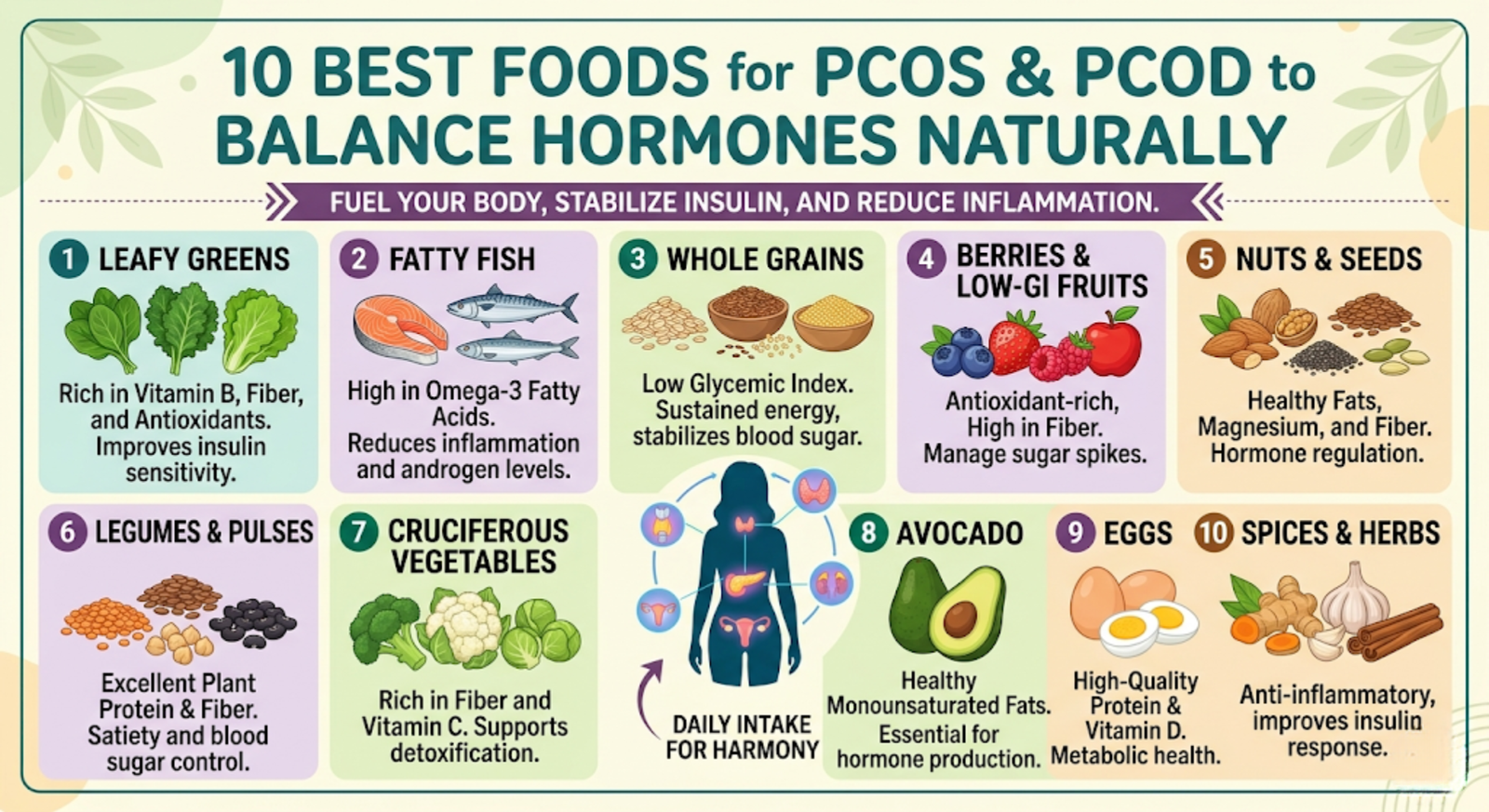
Struggling with PCOS or PCOD? These 10 Superfoods Can Help Balance Hormones Naturally
Polycystic Ovary Syndrome (PCOS) and Polycystic Ovarian Disease (PCOD) affect millions of women worldwide, causing symptoms such as irregular periods, hormonal imbalance, weight gain, acne, excessive hair growth, and fertility challenges. While medical treatment plays an important role, nutrition is one of the most powerful tools for managing symptoms naturally.
In this expert guide, Dr. Mukti Harne Paithankar, Experienced Gynaecologist & IVF Specialist, shares the top 10 foods that can help regulate hormones, improve menstrual cycles, reduce androgen levels, and support fertility naturally.
Why Diet Matters in PCOS & PCOD
Women with PCOS often experience insulin resistance and elevated androgen (male hormone) levels. These hormonal imbalances can disrupt ovulation and menstrual cycles.
A nutrient-rich, anti-inflammatory diet can:
✔ Improve insulin sensitivity
✔ Support regular ovulation
✔ Reduce androgen levels
✔ Help with weight management
✔ Improve fertility outcomes
✔ Reduce inflammation in the body
Let’s explore the best foods for PCOS and PCOD management.
1. Papaya
Papaya is rich in antioxidants, vitamins A and C, and digestive enzymes that support hormonal health.
Benefits:
- May help regulate menstrual cycles
- Supports healthy digestion
- Reduces inflammation
- Rich in antioxidants that protect reproductive health
Best way to consume: Fresh papaya as a mid-morning snack.
2. Pumpkin Seeds
Pumpkin seeds are packed with zinc, magnesium, iron, and healthy fats that support hormone production.
Benefits:
- Helps lower androgen levels
- Supports ovulation
- Improves insulin sensitivity
- Promotes better reproductive health
Best way to consume: 1–2 tablespoons daily as a snack or salad topping.
3. Spearmint Tea
Spearmint tea has gained popularity for its natural anti-androgen properties.
Benefits:
- May reduce excess facial hair growth
- Helps lower testosterone levels
- Supports hormonal balance
- Promotes relaxation and stress reduction
Best way to consume: 1–2 cups daily.
4. Flaxseeds
Flaxseeds contain lignans and omega-3 fatty acids that help regulate hormones naturally.
Benefits:
- Supports estrogen balance
- Reduces inflammation
- Improves insulin resistance
- Aids weight management
Best way to consume: Ground flaxseeds added to smoothies, yogurt, or oats.
5. Leafy Green Vegetables
Spinach, kale, fenugreek leaves, and other greens provide essential nutrients for hormone health.
Benefits:
- Rich in iron and folate
- Supports ovulation
- Improves metabolic health
- Helps combat inflammation
Best way to consume: Salads, soups, or cooked vegetables.
6. Berries
Blueberries, strawberries, and raspberries are loaded with antioxidants.
Benefits:
- Reduce oxidative stress
- Improve insulin sensitivity
- Support healthy weight management
- Promote reproductive wellness
Best way to consume: Fresh or frozen as snacks.
7. Avocados
Avocados provide healthy monounsaturated fats that are essential for hormone production.
Benefits:
- Supports hormonal regulation
- Helps control blood sugar levels
- Improves satiety
- Supports fertility health
Best way to consume: Salads, smoothies, or toast.
8. Fatty Fish
Salmon, sardines, and mackerel are rich in omega-3 fatty acids.
Benefits:
- Reduces inflammation
- Supports ovulation
- Improves insulin sensitivity
- Promotes heart health
Best way to consume: 2–3 servings per week.
9. Cinnamon
Cinnamon is a natural spice known for improving insulin sensitivity.
Benefits:
- Supports regular menstrual cycles
- Helps stabilize blood sugar
- Reduces insulin resistance
- Supports metabolic health
Best way to consume: Add to tea, oats, or smoothies.
10. Lentils and Legumes
Beans, lentils, and chickpeas provide plant-based protein and fiber.
Benefits:
- Stabilize blood sugar levels
- Support healthy weight management
- Improve insulin sensitivity
- Keep you feeling fuller longer
Best way to consume: Soups, salads, curries, and snacks.
Foods to Avoid If You Have PCOS or PCOD
To maximize hormonal balance, limit:
- Sugary beverages
- Processed foods
- Refined carbohydrates
- Excessive fried foods
- High-sugar desserts
- Trans fats
These foods can worsen insulin resistance and increase inflammation.
Lifestyle Tips for Better Hormonal Balance
Along with a healthy diet:
- Exercise regularly
- Maintain a healthy weight
- Get 7–9 hours of quality sleep
- Manage stress through yoga and meditation
- Stay hydrated
- Follow your doctor’s treatment plan
A combination of healthy eating and lifestyle modifications can significantly improve PCOS symptoms.
Frequently Asked Questions (FAQs)
Which food is best for PCOS and irregular periods?
Foods rich in fiber, antioxidants, and healthy fats such as papaya, pumpkin seeds, flaxseeds, leafy greens, and berries are among the best options for supporting hormonal balance and menstrual regularity.
Can pumpkin seeds help reduce PCOS symptoms?
Yes. Pumpkin seeds contain zinc and healthy fats that may help regulate hormones, improve ovulation, and reduce androgen-related symptoms.
Is spearmint tea effective for PCOS?
Research suggests that spearmint tea may help lower testosterone levels and reduce symptoms such as excessive facial hair growth in some women with PCOS.
What should I avoid eating with PCOS?
Avoid excessive sugar, refined carbohydrates, processed foods, fried foods, and sugary beverages, as they can worsen insulin resistance and inflammation.
Can diet alone cure PCOS?
PCOS cannot be completely cured through diet alone. However, a healthy diet combined with medical guidance, exercise, and lifestyle changes can significantly improve symptoms and overall reproductive health.
How long does it take to see results from dietary changes?
Many women notice improvements in energy levels, menstrual regularity, and metabolic health within a few months of consistent healthy eating and lifestyle changes.
Final Thoughts
Managing PCOS and PCOD naturally starts with the right nutrition. Incorporating hormone-friendly foods such as papaya, pumpkin seeds, spearmint tea, flaxseeds, leafy greens, berries, and healthy fats can support menstrual health, improve fertility, and reduce hormonal imbalances.
Every woman’s body is unique, so it is important to consult a qualified gynecologist or fertility specialist for personalized guidance and treatment.
Book Your PCOS & Fertility Consultation Today
Experiencing irregular periods, hormonal imbalance, difficulty conceiving, or PCOS symptoms?
Dr. Mukti Harne Paithankar, Experienced Gynaecologist & IVF Specialist, offers comprehensive evaluation and personalized treatment plans to help you achieve better hormonal health and fertility outcomes.
📞 Schedule your consultation today.
📍 Get expert guidance for PCOS, PCOD, infertility, IVF, and women’s health.
🌸 Take the first step toward balanced hormones and a healthier future.