

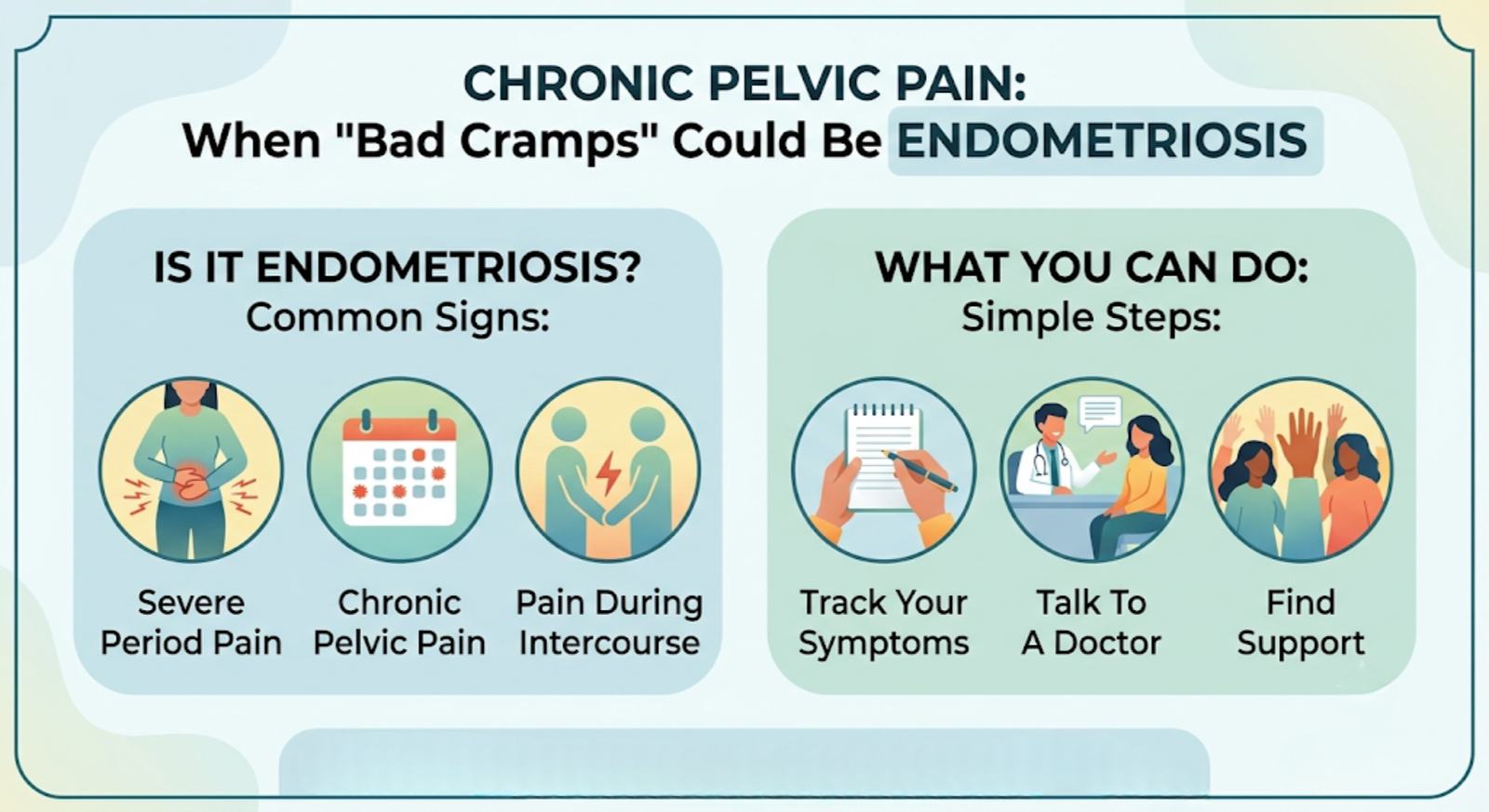
Many women are told that painful periods are just part of being a woman. But if pelvic pain disrupts your daily life, affects your work, relationships, or fertility, it deserves medical attention.
Persistent pelvic pain is not something you should ignore. One of the most common yet often overlooked causes is Endometriosis.
Early diagnosis can help relieve pain, preserve fertility, and improve your quality of life.
What Is Endometriosis?
Endometriosis is a condition in which tissue similar to the lining of the uterus grows outside the uterus, commonly on the ovaries, fallopian tubes, pelvic lining, and surrounding organs.
These tissues respond to hormonal changes during each menstrual cycle, causing:
- Inflammation
- Internal bleeding
- Scar tissue (adhesions)
- Severe pelvic pain
- Fertility challenges
Although endometriosis affects millions of women worldwide, many experience delays in diagnosis because symptoms are often mistaken for normal menstrual pain.
Signs That Your Pelvic Pain May Be More Than Period Cramps
If you experience any of the following symptoms, consult a gynecologist:
Severe Period Pain
Pain that prevents you from attending work, school, or daily activities.
Chronic Pelvic Pain
Pain that continues even between menstrual cycles.
Pain During Intercourse
Deep pelvic pain during or after sexual activity.
Pain During Urination or Bowel Movements
Especially during menstruation.
Heavy Menstrual Bleeding
Excessive bleeding or bleeding between periods.
Difficulty Getting Pregnant
Endometriosis is one of the leading causes of female infertility.
Fatigue and Digestive Symptoms
Bloating, constipation, diarrhea, nausea, or chronic tiredness that worsens during periods.
Why Does Endometriosis Cause So Much Pain?
The misplaced tissue behaves like the uterine lining—it thickens, breaks down, and bleeds every month. However, unlike menstrual blood, it has nowhere to go.
This leads to:
- Chronic inflammation
- Scar formation
- Adhesions
- Nerve irritation
- Persistent pelvic pain
Over time, symptoms may worsen if left untreated.
Who Is at Higher Risk?
You may have a higher chance of developing endometriosis if you have:
- A family history of endometriosis
- Early onset of menstruation
- Short menstrual cycles
- Heavy or prolonged periods
- Never been pregnant
- Fertility problems
Can Endometriosis Affect Fertility?
Yes.
Endometriosis can affect fertility by:
- Damaging the ovaries
- Blocking fallopian tubes
- Reducing egg quality
- Causing inflammation around reproductive organs
The good news is that early diagnosis and appropriate treatment can improve fertility outcomes.
Women planning pregnancy should seek evaluation as early as possible.
How Is Endometriosis Diagnosed?
Your gynecologist may recommend:
- Detailed medical history
- Pelvic examination
- Ultrasound scan
- MRI (when required)
- Laparoscopy (gold standard for diagnosis in selected cases)
Early diagnosis helps prevent disease progression and improves long-term outcomes.
Treatment Options for Endometriosis
Treatment depends on:
- Your age
- Severity of symptoms
- Stage of disease
- Pregnancy plans
Common treatment options include:
Lifestyle Changes
- Regular exercise
- Healthy anti-inflammatory diet
- Stress management
- Adequate sleep
Medications
- Pain relief medications
- Hormonal therapy
- Birth control pills
- Progesterone therapy
Minimally Invasive Surgery
Laparoscopic surgery may remove endometriosis tissue while preserving fertility.
Fertility Treatment
Women facing infertility may benefit from advanced fertility care, including IVF when appropriate.
When Should You See a Gynecologist?
Do not ignore persistent pelvic pain if:
- Pain worsens every month
- Painkillers no longer help
- Period pain affects your daily routine
- You experience pain during intercourse
- You’re trying to conceive without success
- Heavy bleeding is becoming more frequent
Seeking medical care early can reduce complications and improve your quality of life.
Frequently Asked Questions (FAQs)
1. Is severe period pain normal?
No. Mild discomfort is common, but severe pain that limits daily activities should be evaluated by a gynecologist.
2. Can endometriosis go away on its own?
Endometriosis usually does not disappear without treatment. Symptoms may improve temporarily but often require medical management.
3. Can I get pregnant if I have endometriosis?
Yes. Many women with endometriosis conceive naturally, while others may need fertility treatment depending on the severity of the condition.
4. What is the first symptom of endometriosis?
The most common early symptom is painful menstrual cramps that become progressively worse over time.
5. Does endometriosis always cause infertility?
No. Many women with endometriosis have successful pregnancies. Early diagnosis improves fertility outcomes.
6. What foods should be avoided in endometriosis?
Some women find symptom relief by limiting processed foods, excessive sugar, trans fats, and highly processed red meat while following an anti-inflammatory diet.
7. Can endometriosis return after treatment?
Yes. Symptoms can recur, making regular follow-up with your gynecologist important.
8. Is laparoscopy always necessary?
Not always. Many cases can be evaluated using symptoms, examination, and imaging. Your doctor will recommend laparoscopy only when appropriate.
Don’t Ignore Chronic Pelvic Pain
Your pain is real, and it deserves attention.
If pelvic pain is interfering with your life, relationships, work, or future pregnancy plans, don’t wait for it to become worse.
Early diagnosis and timely treatment can help relieve symptoms, protect fertility, and improve your overall well-being.
Book Your Consultation Today
🏥 Dr. Paithankar’s Speciality Clinic
Dr. Mukti Harne Paithankar
Gynecologist & IVF Specialist
✔ Expert evaluation for chronic pelvic pain
✔ Advanced diagnosis of endometriosis
✔ Fertility-focused treatment plans
✔ Personalized women’s healthcare
Take the first step toward a healthier, pain-free life. Schedule your consultation today.